Teacher Toolkit

Brought to you by:

Pre-Show

IGNITE STUDENT CURIOSITY

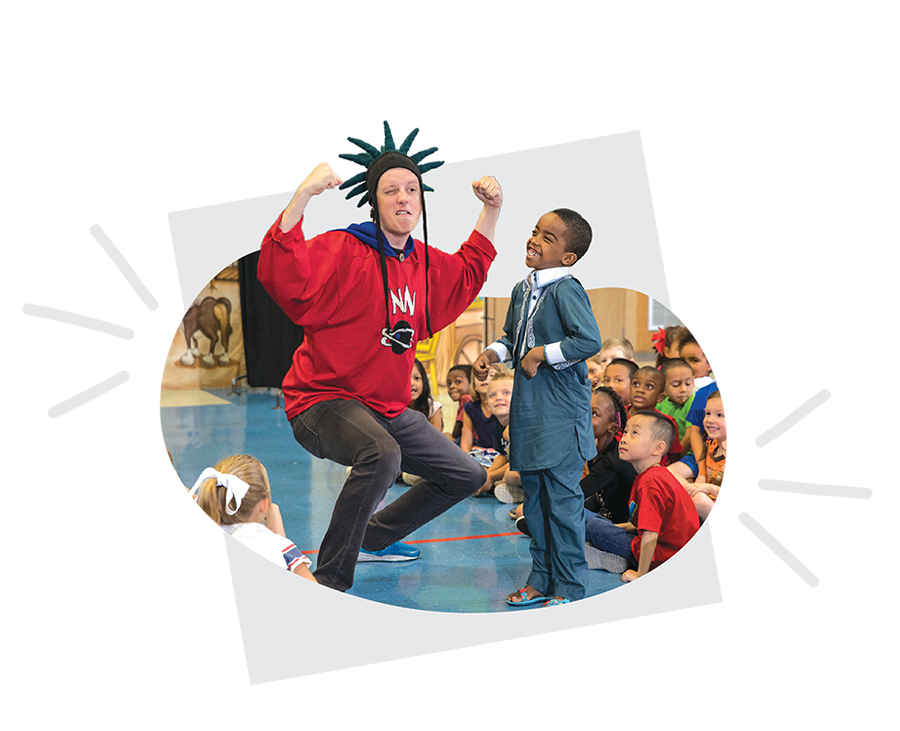
Florida Power & Light and NTC are thrilled to bring Captain Wattage to your school — a live, theatrical experience for students in grades K-5. Through the power of performance, two talented actors blend education and entertainment to guide students through an exploration of energy efficiency & electrical safety. We’ve put together this toolkit to help support you in maximizing this experience for your students. It contains classroom and at-home resources for use before and after the performance. Captain Wattage is aligned with state and national standards and covers the following topics:

Help Students Be Good Audience Members

Many students may not have experienced live theatre before, and learning to be a good audience member takes practice. We have prepared a video to assist your students in this learning. Share it with your class before the performance to get everyone ready for the show.

The actors will also open the show with a reminder about being good audience members to help reinforce these skills.

Activate Prior Knowledge

Get your students thinking about the topics covered in the performance through the Know, Wonder, Learned (KWL) chart linked here. This can be completed as a group or individually. Complete the Know and Wonder sections before the show, and the Learned section afterwards.

Get a ready-to-use KWL chart designed for whole class instruction—perfect for projecting, presenting, or printing for group use.

Grab a student-friendly KWL chart—ideal for independent work, small groups, or personal reflection.

Vocabulary Words and Definitions

Before the show, help your students get familiar with key vocabulary related to energy efficiency & electrical safety. You can integrate them into lesson plans or review them together as a class.

Power Plant – A building where electricity is made

Energy – The ability to do work and the force that makes things change

Resource – Things we use to make electricity, like coal, oil, natural gas, water, solar energy and wind

Renewable Resource – A resource that can be replaced in about the same time it takes to use it

Conserve – To save or use wisely

Watt – A unit of electricity

Efficient – Producing very little waste

Generate – To bring into existence

Energy Vampire – A device that uses electricity even when it appears off
Middle School Show

It's Showtime!

Now that your students’ curiosity has been ignited, enjoy and participate in the show!

POST-show

EXTEND STUDENT LEARNING

The show may be over, but the learning doesn’t have to stop. Use the resources below to help deepen your students’ understanding of energy efficiency & electrical safety.

And don’t forget to complete a program evaluation at HeyTeachers.org! It helps NTC continue creating great programs, and you will be entered in a drawing for a chance to win $250 for your classroom.

Summarize Key Concepts

Spark classroom conversation about energy efficiency & electrical safety, give students a chance to reflect on the performance and encourage critical thinking.

Using the Know, Wonder, Learned (KWL) chart, complete the final section: Learned. As a group or individually, students can summarize their key takeaways from the performance.

Lesson Plans

Continue to bring energy efficiency & electrical safety to life through the following arts-integrated and hands-on lesson plans.

This lesson integrates basic acting tools (body, voice, and imagination) for students to act out vocabulary words. By using movement to embody the meaning of each word, students are more likely to retain its meaning and concept. It is a fun way to differentiate instruction to help students learn and remember the meaning of words.

This format is particularly powerful because students have to use vocabulary words from two different angles — as the confused “asker” who doesn’t fully understand, and as the knowledgeable “expert” who does. That dual perspective requires a deeper grasp of word meaning than a one-directional task. It works well with any topic.

In this lesson, students will use a combination of research, class discussion and the Conservation and the Environment Worksheet (included) to understand and explain the difference between weather and climate, analyze information and data to describe how and why the climate is changing and describe how using energy impacts the environment.

In this lesson, students will conduct an audit of their classroom energy users to examine the classroom to understand how energy is used, produce and analyze data in order to identify opportunities to save energy and create materials to communicate the importance of saving energy.

Encore

Engage Independent Learning

Keep the learning going with digital games, printable activities and take-home materials your students can explore on their own. Sending resources home helps reinforce the message beyond the classroom and keeps the conversation growing with families.

Games and Activites

Your students get their own toolkit too — packed with fun games and activities that reinforce what they learned. Share the link below with your class!

Printable Handouts

These activities and puzzles are designed for easy printing and work great in the classroom or at home.

Bring the Learning Home

Send these take-home resources with your students to spark conversations with their families and reinforce the message beyond the classroom. 

Florida Power & Light wants to help you become a conservation expert!

Translate »

Seen the show?

Hey Teachers

Evaluate the Program at HeyTeachers.org

Upon completion you are entered into a drawing for a chance to win $250 for your classroom.

Skip to content