Brought to you by:
Pre-Show
IGNITE STUDENT CURIOSITY
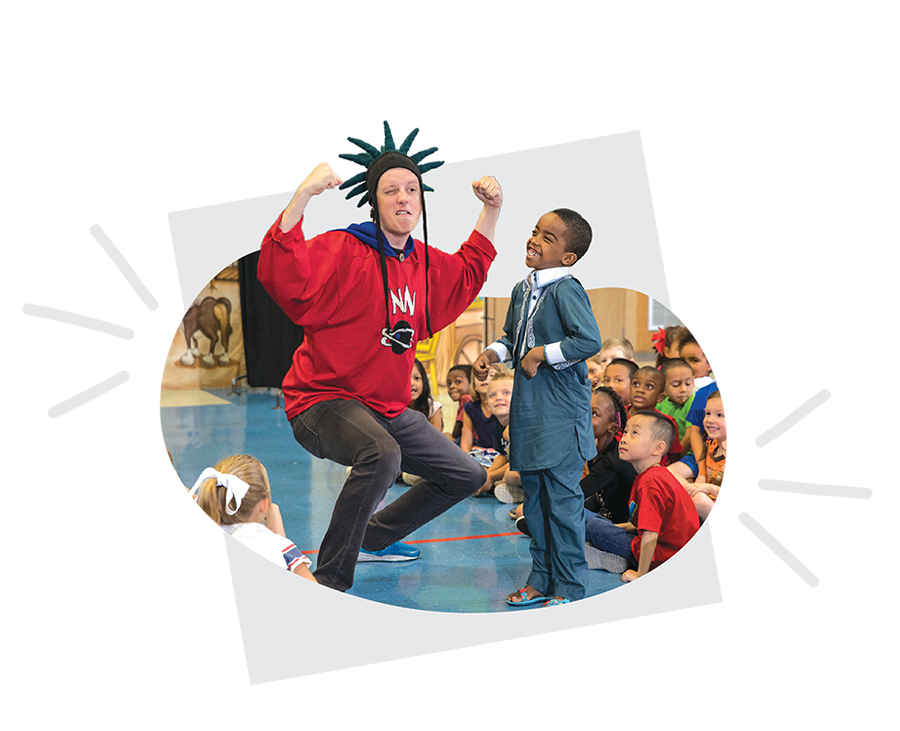
Rowland Water District and NTC are thrilled to bring Conservation Cove to your school — a live, theatrical experience for students in grades K-5 . Through the power of performance, two talented actors blend education and entertainment to guide students through an exploration of water conservation. We’ve put together this toolkit to help support you in maximizing this experience for your students. It contains classroom and at-home resources for use before and after the performance. Conservation Cove is aligned with state and national standards and covers the following topics:
- How droughts affect communities in California
- Why it is important to protect the water in our communities
- How to change water-wasting habits into water-conservation habits
- How to protect our water from pollution
Visit SaveTarrantWater.com to learn how to save water at home. You can learn how to find and fix water leaks, check out free gardening classes, and sign up for weekly watering advice and free sprinkler evaluations!
Help Students Be Good Audience Members
Many students may not have experienced live theatre before, and learning to be a good audience member takes practice. We have prepared a video to assist your students in this learning. Share it with your class before the performance to get everyone ready for the show.
The actors will also open the show with a reminder about being good audience members to help reinforce these skills.
Activate Prior Knowledge
Get your students thinking about the topics covered in the performance through the Know, Wonder, Learned (KWL) chart linked here. This can be completed as a group or individually. Complete the Know and Wonder sections before the show, and the Learned section afterwards.
Get a ready-to-use KWL chart designed for whole class instruction—perfect for projecting, presenting, or printing for group use.
Grab a student-friendly KWL chart—ideal for independent work, small groups, or personal reflection.
Vocabulary Words and Definitions
Before the show, help your students get familiar with key vocabulary related to water conservation. You can integrate them into lesson plans or review them together as a class.
Vocabulary
Aquifer – A layer of rock, sand, or gravel underground that stores and carries groundwater.
Condensation – The process of water vapor cooling and changing into liquid water.
Conserve – To use natural resources carefully so they are not wasted.
Drought – A long period of time with much less rain than normal.
Evaporation – The process of liquid water changing into water vapor.
Freshwater – Water that is not salty and can be used for drinking, farming, and many other purposes.
Groundwater – Water stored beneath the Earth’s surface in soil, sand, and rock.
Pollution – Harmful substances that contaminate or dirty the environment.
Precipitation – Water that falls from clouds as rain, snow, sleet, or hail.
Resource – Something useful that people need or use, such as water, air, or trees.
Water Cycle – The continuous movement of water around Earth through evaporation, condensation, precipitation, and collection.
It's Showtime!
Now that your students’ curiosity has been ignited, enjoy and participate in the show!
If you couldn’t catch our live performance or simply want to relive the magic, you’re in luck! You can now watch the recording of the entire performance at your convenience. Click the link below to experience the excitement again:
POST-show
EXTEND STUDENT LEARNING
The show may be over, but the learning doesn’t have to stop. Use the resources below to help deepen your students’ understanding of water conservation.
And don’t forget to complete a program evaluation at HeyTeachers.org! It helps NTC continue creating great programs, and you will be entered in a drawing for a chance to win $250 for your classroom.
Summarize Key Concepts
Spark classroom conversation about water conservation, give students a chance to reflect on the performance and encourage critical thinking.
Using the Know, Wonder, Learned (KWL) chart, complete the final section: Learned. As a group or individually, students can summarize their key takeaways from the performance.
Lesson Plans
Continue to bring water conservation to life through the following arts-integrated and hands-on lesson plans.
This lesson integrates basic acting tools (body, voice, and imagination) for students to act out vocabulary words. By using movement to embody the meaning of each word, students are more likely to retain its meaning and concept. It is a fun way to differentiate instruction to help students learn and remember the meaning of words.
This format is particularly powerful because students have to use vocabulary words from two different angles — as the confused “asker” who doesn’t fully understand, and as the knowledgeable “expert” who does. That dual perspective requires a deeper grasp of word meaning than a one-directional task. It works well with any topic.
In this lesson, students will use a combination of research, class discussion and the Importance of Ecosystems Worksheet (included) to explain what an ecosystem is, understand the definition of an animal species and describe how different ecosystems depend on each other.
In this lesson, students will research the parts of the Water Cycle and conduct an in-classroom experiment to explain the stages of the water cycle, understand how water is reused and recycled through Earth’s systems and observe and record evidence of the water cycle.
Encore
Engage Independent Learning
Keep the learning going with digital games, printable activities and take-home materials your students can explore on their own. Sending resources home helps reinforce the message beyond the classroom and keeps the conversation growing with families.
Games and Activites
Your students get their own toolkit too — packed with fun games and activities that reinforce what they learned. Share the link below with your class!
Digital Booklet
The activities and puzzles in this booklet review key concepts from the show and can help extend student learning at home and in the classroom.
Bring the Learning Home
Send these take-home resources with your students to spark conversations with their families and reinforce the message beyond the classroom.
Additional Resources
[Addtional links here]
Brought to you by:
Help us save and protect water!
Visit SaveTarrantWater.com to learn more.